
Heart rate variability and alpha-pinene
A 2016 study in J Wood Sci found a 46.8% increase in parasympathetic HRV among subjects inhaling alpha-pinene, the dominant compound in hinoki wood oil.
Matsumoto et al., J Wood Sci, 2016
The training and recovery routine that keeps me strong, mobile, and ready without breaking down. I'll send you exactly how I run it.
Check your inbox. The simple training routine should arrive soon.

MY RECOVERY ROUTINEANTHONY | FOUNDER
From training, Hyrox, boxing and chasing a sub-20 5K.
recover faster
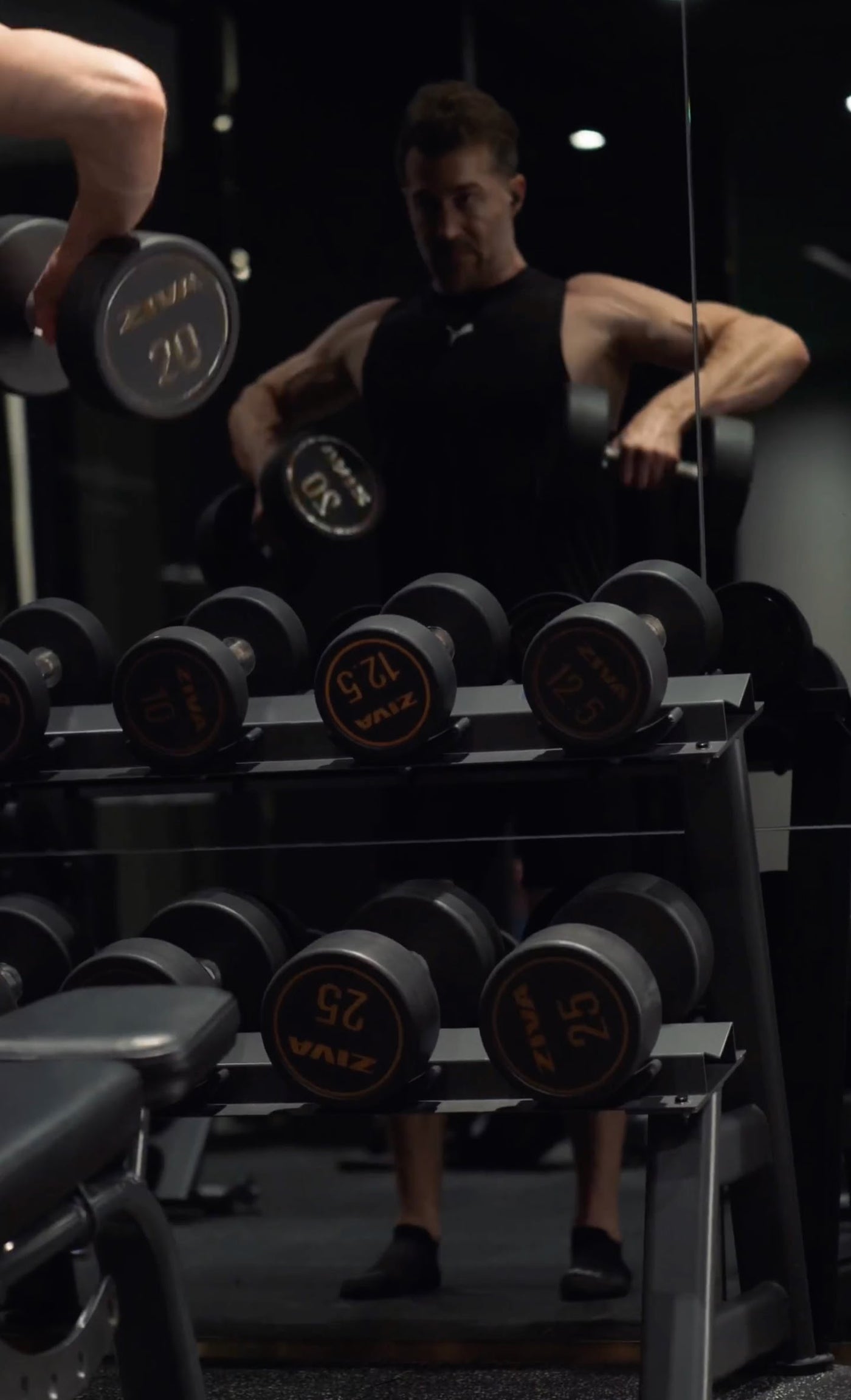
I used to think recovery routines were optional
I'm 41 and training harder than I did at 25. Weight training, boxing, Hyrox, chasing a sub-20 5K this year. The only thing that changed is I figured out that recovery matters as much as the training itself. That single shift is most of why I'm in the best shape of my life, physically and mentally. Try this for a week and see how it lands.
try this

Protein shake as soon as the workout is done and swap the playlist to something calmer. Small cues that signal the work is finished. Don't judge my choice of protein.

Find a quiet spot at the gym and add 1-2 drops of hinoki oil on your wood block. Sit or lay down and do a few minutes of light stretching as the oil soaks in.

After stretching, do box breathing. 4-second inhale, hold for 4, exhale for 4, hold for 4. Repeat for at least 5 minutes. Smell hinoki on each inhale.

the science of recovery
The evidence behind the routine.
I felt hinoki before I understood it. The first time was in a wooden tub in Japan and the shift was immediate. I just didn't know why. These three studies are what I found when I went looking. None were conducted on our products specifically. They're the broader research on the compounds and practices that hinoki is part of.
Heart rate variability and alpha-pinene
A 2016 study in J Wood Sci found a 46.8% increase in parasympathetic HRV among subjects inhaling alpha-pinene, the dominant compound in hinoki wood oil.
Matsumoto et al., J Wood Sci, 2016Cortisol and phytoncides
A randomized controlled trial in Korean J Adult Nurs found significantly lower serum cortisol in subjects who inhaled phytoncides daily over two weeks.
Nam & Uhm, Korean J Adult Nurs, 2008Aromatherapy and post-exercise recovery
A 2024 study in Scientific Reports found faster parasympathetic recovery in subjects who used aromatherapy after exercise compared to placebo.
Akimoto et al., Sci Rep, 2024what the numbers actually mean
A closer look at what the research shows.
The number comes from a controlled study measuring heart rate variability while subjects inhaled alpha-pinene, the dominant compound in hinoki wood oil. HF power, the HRV band most directly tied to parasympathetic nervous system activity, went up 46.8% versus the control. Heart rate dropped at the same time. In plain English: smelling alpha-pinene produced a measurable shift toward the recovery side of the nervous system. That's the part that surprised me. I knew hinoki felt good. I didn't know there was a real, measurable shift happening on the inside.
Heavy training spikes cortisol. That's normal and necessary in the short term. The problem is when cortisol stays elevated because the body doesn't get the signal to come down. Researchers have studied phytoncide inhalation as one factor that may influence stress hormone levels, which is part of why hinoki has held my attention. The full picture of recovery is much bigger than one compound, but understanding how the pieces interact is what got me building a routine instead of just hoping I'd feel better.
A 2024 study in Scientific Reports looked specifically at this. Subjects did moderate aerobic exercise, then recovered either with aromatherapy or a placebo. The aroma group showed faster recovery of HF power and RMSSD, both markers of parasympathetic activity, compared to placebo. The researchers concluded that aromatherapy facilitates the recovery of parasympathetic nervous activity after exercise. That's the window this routine is designed around. View study.
Slow breathing and alpha-pinene push the same system, the parasympathetic nervous system, but they get there differently. Breathing works mechanically through the diaphragm and the vagus nerve. A 2022 systematic review in Neuroscience & Biobehavioral Reviews found that voluntary slow breathing (around 6 breaths per minute) reliably increases vagally-mediated HRV. Scent works chemically through the olfactory bulb into the limbic system. Same target, two different routes. That's why I do them at the same time. View study.
why hinoki specifically
Not every scent does this.
There's a reason this routine uses hinoki and not lavender or eucalyptus. Hinoki oil, distilled from Chamaecyparis obtusa, has a compound profile that's been studied for decades. We work directly with a forest owner in Japan, so I've seen where the trees grow and how the oil is made.
α-Pinene
The dominant compound
The most-studied compound in hinoki oil. Research has looked at α-pinene's role in calm and recovery, particularly through inhalation.
Hinokitiol
Largely unique to hinoki
Largely unique to hinoki. A compound studied for centuries because of how it gives hinoki wood its characteristic durability and scent.
Limonene
The bright note
The bright top note. Research has looked at limonene's effect on mood, and you can smell what it brings to hinoki. A subtle lift that keeps the scent grounded without ever feeling heavy.


